A Field Sobriety Test Defense Attorney in Delaware County, PA, Who Understands Why Checkpoint Stops Require a Different Defense Approach
Being pulled over at a sobriety checkpoint is a disorienting experience. One moment you are heading home on a familiar road, and the next you are facing flashing lights, officers at your window, and questions you were not prepared to answer. If you were stopped at a checkpoint in Delaware County, you may be wondering whether you did anything wrong at all. As a DUI checkpoint defense lawyer in Delaware County, the Law Offices of Joseph Lesniak, LLC, understands exactly what you are going through and is ready to stand by your side.
The most important thing to understand from the start is this: a checkpoint stop is fundamentally different from a standard traffic stop. In an ordinary traffic stop, police generally need individualized legal justification to stop a particular vehicle, such as an observed traffic violation, an equipment issue, or reasonably reliable information suggesting unlawful conduct. At a properly administered checkpoint, individualized suspicion is not required for the initial brief stop. At a checkpoint, no such individual suspicion is required. That distinction changes the entire landscape of your defense, and it is exactly why a qualified Delaware County DUI checkpoint defense lawyer focuses so closely on how the checkpoint was conducted, because the legal requirements that govern it become central to whether the stop and any evidence gathered from it can hold up.
This page explains what Pennsylvania law generally requires for a valid sobriety checkpoint, how field sobriety test evidence gathered at a checkpoint may be challenged, what Pennsylvania's tiered DUI system means for your situation, and why the Law Offices of Joseph Lesniak, LLC, brings a perspective to these cases that few other firms can offer.
Where DUI Checkpoints Operate and Why a Delaware County DUI Checkpoint Defense Lawyer Matters
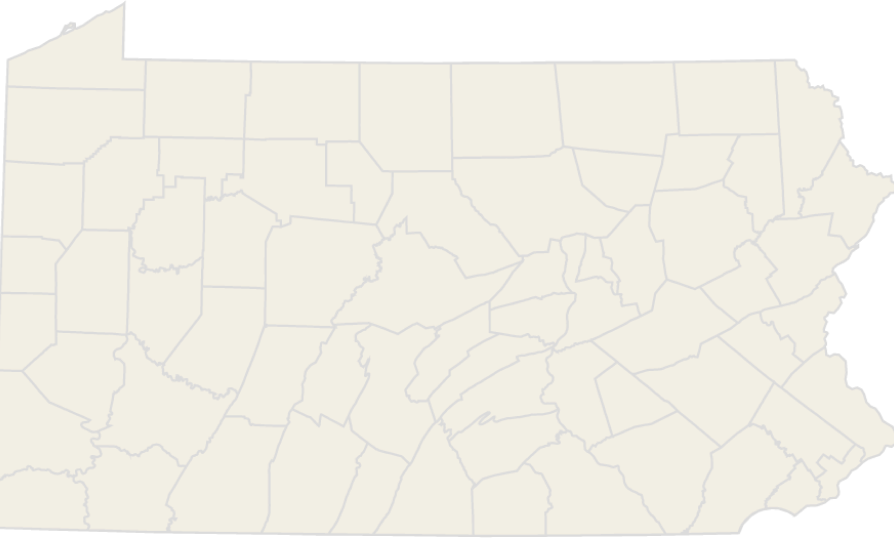
Delaware County drivers encounter sobriety checkpoints on some of the region's most-traveled corridors. Routes like Baltimore Pike, Route 1, and Route 202, as well as areas near I-95 and the roads running through and around Media, are among the types of locations where checkpoint enforcement may occur. Pennsylvania State Police and local departments in the county may operate these stops, particularly during weekends, holidays, and other high-enforcement periods.
It is worth saying clearly: being stopped at a checkpoint does not mean you have been accused of anything. Officers stop vehicles according to a predetermined pattern, not because of anything they observed about your driving. Many Delaware County residents pass through checkpoints simply because of where their commute or evening plans happened to take them.
The circumstances after the initial stop are what shape the legal questions in your case. How the checkpoint was set up, how officers conducted themselves, and what evidence was gathered in the moments that followed are all areas that a thorough defense review will examine.
A Field Sobriety Test Defense Attorney in Delaware County, PA Examines Whether the Checkpoint Was Legally Valid
Pennsylvania courts have addressed the constitutionality of sobriety checkpoints, and the law is clear on one point: not every checkpoint automatically passes legal scrutiny. A checkpoint is generally permissible under Pennsylvania law only when law enforcement follows a specific set of constitutional and procedural requirements. If those requirements were not met in your stop, the checkpoint itself and any evidence gathered from it may be subject to challenge.
In general terms, a valid sobriety checkpoint in Pennsylvania is expected to satisfy requirements along these lines:
- Advance warning and publicity: Law enforcement generally must provide sufficient advance warning that checkpoint activity will occur and must make the checkpoint reasonably visible to approaching drivers. Whether the warning was sufficient depends on the publicity, signs, lighting, police presence, and other circumstances; authorities do not necessarily have to disclose the precise location and starting time publicly in advance.
- Supervisory approval: The decision to schedule and operate a checkpoint should come from police administration, not from individual officers acting on their own initiative.
- Neutral, non-discretionary stop criteria: Officers must follow an objective, predetermined pattern for selecting which vehicles to stop, such as stopping every third or fifth car. Individual officer discretion in choosing who to stop is not permitted.
- Reasonable location and duration: The checkpoint's placement should be based on relevant enforcement history in that area, and the stop itself must be brief and non-invasive unless specific grounds for further investigation arise.
- Minimal intrusion: The initial stop cannot include a search of the vehicle or its occupants without additional justification.
If any of these requirements were not properly followed in your specific stop, the legality of the checkpoint and the admissibility of the evidence gathered from it may be open to challenge. Evaluating that question requires a careful, fact-specific review of how your stop was actually conducted, which is exactly the kind of analysis we perform for every client.
Field Sobriety Tests at Checkpoints: What a Delaware County DUI Checkpoint Defense Lawyer Wants You to Know
Even when a checkpoint itself was lawfully conducted, the evidence gathered at the scene is not automatically conclusive. Field sobriety tests are a common next step after a checkpoint stop, and their results are far more vulnerable to challenge than many drivers realize. As a field sobriety test defense attorney in Delaware County, PA, the Law Offices of Joseph Lesniak, LLC, reviews every aspect of how these tests were administered and what the results actually show.
Several factors may affect the reliability of field sobriety test results:
- Standardized administration: Field sobriety tests are designed to be given in a specific, consistent way. Deviations in how an officer delivers instructions or demonstrates the test may affect whether the results are meaningful.
- Medical and physical conditions: Inner-ear disorders, leg or back injuries, fatigue, anxiety, and certain medications may produce the same physical indicators that officers are trained to flag as signs of impairment. These conditions have nothing to do with alcohol.
- Lighting and road surface: Checkpoint environments are not always ideal for roadside testing. Poor lighting, uneven pavement, or inclement weather at the scene may affect a driver's performance on balance-based tests.
- Officer training and test administration: The officer’s training and experience, the instructions and demonstrations provided, the testing conditions, and whether standardized procedures were followed can all affect the weight and reliability of the officer’s observations.
Chemical test results, whether from a breathalyzer or a blood draw, may also be subject to scrutiny depending on how and when they were administered, whether the testing equipment was properly calibrated, and whether the correct procedures were followed. We review the full sequence of events from the initial checkpoint stop through every test administered, looking carefully for where the evidence may be challenged.
What Pennsylvania's Tiered DUI System Means for Your Case and How a Delaware County DUI Checkpoint Defense Lawyer Uses It
Pennsylvania structures DUI charges around measured blood alcohol concentration and impairment level, using a three-tier system where the potential consequences increase significantly as the alleged BAC rises. Because checkpoint cases so often turn on chemical test results, the accuracy and admissibility of those results are especially important to the defense strategy, and it is exactly the kind of technical analysis a qualified Delaware County DUI checkpoint defense lawyer conducts on every case from the start.
Understanding the tier you are facing shapes every decision in your case:
- General impairment tier: This applies when a driver is alleged to be incapable of safe driving, even without a BAC reading above the threshold for a higher tier. It carries the least severe potential consequences of the three, though a conviction still creates a criminal record and may affect your driving privileges depending on your prior history.
- High BAC tier: This tier involves a measured BAC above the general impairment threshold and carries more serious potential consequences, including mandatory minimum jail time and license suspension for many defendants, even on a first offense.
- Highest BAC and related offenses: This tier includes a BAC of 0.16% or higher and controlled-substance DUI allegations. The same sentencing tier may apply to general-impairment cases involving refusal of breath testing or refusal of blood testing requested under a valid search warrant. Other refusal allegations may still lead to separate PennDOT license consequences.
Prior offenses within Pennsylvania's lookback period, the presence of a minor in the vehicle, and other aggravating factors can all affect how a charge is classified and what consequences may follow. The tier a person is charged under shapes every aspect of the defense, which is why understanding the full picture from the very beginning matters so much. Early legal counsel allows us to assess the strength of the chemical test evidence, evaluate whether the checkpoint was properly conducted, and develop a strategy tailored to your specific situation.
Potential Consequences Beyond the Courtroom
Many people who contact us after a checkpoint stop are focused on the criminal charge itself. What they may not fully anticipate are the collateral consequences that can follow a DUI conviction in Pennsylvania, consequences that extend well beyond any sentence a court may impose.
- Driver's license suspension: A DUI conviction in Pennsylvania may trigger an automatic license suspension period, separate from any court-imposed sentence. The length of that suspension may vary depending on the tier and your prior record.
- Ignition interlock requirements: Depending on the tier and any prior DUI history, a driver may be required to install an ignition interlock device on their vehicle as a condition of restored driving privileges.
- Insurance consequences: A DUI conviction can affect auto insurance rates and coverage availability for years after the case is resolved.
- Employment impact: Certain professional licenses, security clearances, and employment positions may be affected by a DUI conviction on a person's record. This is a concern we take seriously for every client.
- Commercial driver's license holders: Drivers who hold a CDL face particularly serious consequences from a DUI charge, and the stakes of even a first offense may be far greater than for a standard license holder.
Protecting against these collateral consequences is part of what a thorough defense looks like. The Law Offices of Joseph Lesniak, LLC, takes a comprehensive view of every checkpoint case, because the impact of a conviction rarely ends at the courthouse door.
Why the Law Offices of Joseph Lesniak, LLC, Handles Checkpoint Cases Differently
This is a practice devoted entirely to criminal defense. We do not divide our attention across multiple areas of law. That singular focus means deeper, more current knowledge of DUI law and procedure in Pennsylvania, and a defense approach that is built specifically around the realities of how these cases are prosecuted in Delaware County and throughout Southeastern Pennsylvania.
Attorney Joseph Lesniak's background gives the firm a perspective that is genuinely uncommon in criminal defense. He served as an assistant district attorney and as chief prosecutor of the Special Victims and Domestic Violence Division. That prosecutorial experience means he understands how the government builds a DUI case from the inside, including where those cases may have weaknesses that a less experienced attorney might miss. When we evaluate a checkpoint stop, we are not guessing at what the prosecution will argue. We know.
Attorney Lesniak's professional achievements reflect the depth of his commitment to the law and to the Delaware County legal community. He has received the Federal Bureau of Investigation Award for Exceptional Service in the Public Interest and the Nicholas Vadino, Jr. Award for Outstanding Commitment to the Bar by a Young Lawyer from the Delaware County Bar Association. These recognitions speak to a standard of practice that our clients can rely on.
Our firm is based in Media, PA, and we handle cases throughout Delaware County and Southeastern Pennsylvania. Familiarity with local courts, local enforcement patterns, and the procedures of Delaware County's legal system is a genuine asset in every case we take on. We are not a regional firm parachuting in from elsewhere. This is our community, and we know how these cases move through the system here.
We also understand that a checkpoint stop does not happen on a convenient schedule. Someone stopped at 11 p. m. on a Friday should not have to wait until Monday morning to speak with an attorney. Consultations are free, and we are available 24/7. We stand by your side and fight for your rights, from the moment of the stop through the resolution of your case.
Contact a DUI Checkpoint Defense Lawyer in Delaware County
If you were stopped at a sobriety checkpoint in Delaware County, the decisions you make in the days immediately following that stop can affect the outcome of your case. Evidence can be reviewed, checkpoint documentation can be examined, and a defense strategy can begin to take shape, but only if you act before those opportunities narrow. Reaching out to a qualified field sobriety test defense attorney in Delaware County, PA, as soon as possible is the most important step you can take to protect your rights and preserve every available option.
Do not wait to get answers. The Law Offices of Joseph Lesniak, LLC, offers free consultations and is available 24/7. Call us today at 484-444-2348 or fill out the online contact form to speak with our team. We serve clients in Media, PA, throughout Delaware County, and across Southeastern Pennsylvania.
Let the Law Offices of Joseph Lesniak, LLC, stand with you and fight for your rights.